

)
Like most other parts of our everyday lives, dating and forming long-lasting relationships have gone online. Online dating can lead to real connections, but it is also a breeding ground for scammers.
Romance scams exploit people’s need for love and company by coming up with false identities, manufacturing sob stories, and using modern technology to deceive their victims.
If someone you have never met is moving fast in your online relationship, asking for money, or avoiding video calls, you might be dealing with a romance scammer. In this article, we explain how romance scams work, teach you the warning signs to look for, and arm you with information to protect yourself when dating online.
When online love is too good to be true
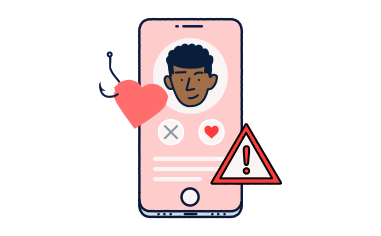
Romance scams (sometimes referred to as catfishing or dating scams) are a form of fraud where criminals pretend to fall in love with someone online. The ultimate goal of a romance scam is to gain the victim’s trust and steal their money or identity.
When you’re communicating online with someone you’ve never met in real life, it is easy for them to hide their true identity. Scammers often create fake profiles on dating apps or social media platforms and build emotional relationships with their targets. Over time, they ask for money, personal information, or gifts.
These scams are emotionally devastating and financially damaging. For instance, a man from Northern Ireland lost more than £200,000 in a romance scam and ended up in debt. According to the Federal Trade Commission (FTC), consumers lost $1.14 billion to romance scams in 2023.
4 types of romance fraud to watch out for
Like most online fraud, romance scams come in many forms, and they are not limited to dating sites and apps like Tinder. In fact, social media platforms are hunting grounds for romance scammers: FTC data shows that about 40% of people who lost money to a romance scam in 2022 had first encountered the scammer on social media.
Here are a few common romance scams to look out for online:
1. Long-distance online dating
Scammers often claim they’re in the military, working overseas, or otherwise unable to meet in person. Once trust is built, the scammer asks their victim for money, often citing emergencies, medical bills, travel expenses, or customs fees as excuses.
These kinds of excuses are the most urgent red flags of a long-distance scam. The alarm bells should be ringing when you are asked for money or sensitive information, either early in the relationship or before meeting for the first time. The use of cryptocurrency is another telltale sign of a scam, as crypto transactions are harder to track.
How to protect yourself
Never send money to someone you have not met in real life.
Be sceptical of sob stories or urgent financial requests, especially when asked to send money.
Use a reverse image search tool, such as Google Images or TinEye, to check if their images have been stolen from elsewhere on the internet.
2. Catfishing with fake profiles
Scammers steal photos from real people and create convincing fake identities. These profiles often look too good to be true, which is exactly what they are. They may avoid video calls, cancel meetups at the last minute, or tell inconsistent stories to avoid meeting face-to-face.
To make their profiles more convincing, scammers may create a whole network of fake profiles to populate their social media feeds. Otherwise, the victim might get suspicious if the person they are communicating with does not have any other friends on their social media profile.
What to do
Ask for a real-time photo or video chat to ensure you are messaging with a real person.
Dig into their social media followers and people who like their posts.
Search their name, job, or phone number for scam reports.
3. Emotional blackmail and manipulation
Once they have your trust, romance scammers often use guilt or emotional manipulation to pressure you. They might say you are the only one who can help or that your lack of support proves you do not love them.
To better influence and manipulate you, romance scammers also demand that you dedicate all your time to them and distance yourself from friends and family.
Spot these common manipulation tactics in a romance scam
Love bombing: excessive flattery and attention to influence you.
Playing the victim: your new romantic interest has frequent crises that need urgent help, often through monetary assistance.
Guilt-tripping: making you feel responsible for their problems or that you do not spend enough time with them.
4. Sextortion and blackmail
Some romance scams begin as flirtatious relationships and quickly progress to exchanging intimate photos or videos. Once you have shared sensitive material or private information, the scammer threatens to release the content unless you pay them. This is better known as sextortion.
Protect yourself from blackmail
Never share compromising photos or videos with people you haven’t met and trust. These can be used both for extortion and identity theft.
If the scammer threatens you, stop responding and report them.
Save all evidence and report the incident to local authorities or the dating platform.
How to stay safe when dating online
Scammers look for victims on dating apps and social media because exploiting feelings is one of the easiest ways to deceive someone. By giving attention, flattering you, and making you feel special, scammers can make you let your guard down. Follow these tips to stop yourself from getting scammed online:
Verify their identity. Always confirm that someone is who they say they are, especially before sharing anything personal or emotional.
Never share personal details with strangers. Avoid sharing your full name, address, or financial details before meeting in person and confirming you can trust them.
Do not send money to people you meet online. In the end, scammers are after your money or other assets they can turn into cash. Stop to think if someone you met online is asking for financial assistance.
Use reputable dating platforms. Look for platforms that verify user identities and have strong moderation policies. A dating website or app, like Tinder, should indicate whether a user has verified their identity.
Talk to someone you trust. Scammers often isolate their victims. A friend may have a view from the outside and can spot red flags you might miss.
If you do get scammed despite staying vigilant, stop all contact immediately and report the scam to the dating platform and your local authorities. Preserve all messages and other material as evidence — all information that can help track down the scammer is valuable.
Consider freezing your credit card and using an ID protection service to keep track of identity theft if you shared your personal details and financial information with the scammer. It is also a good idea to install antivirus software and run a malware scan if you’ve clicked suspicious links or downloaded files sent by the scammer.
)