














2024 is the year of online scams, finds latest annual F-Secured Consumer Threats Guide
This comprehensive report sheds light on the evolving landscape of cyber security threats faced by consumers, offering insights into emerging trends and predictions for the year ahead.
Latest news
2024 is the year of online scams, finds latest annual F-Secured Consumer Threats Guide
This comprehensive report sheds light on the evolving landscape of cyber security threats faced by consumers, offering insights into emerging trends and predictions for the year ahead.
F‑Secure announces latest tier 1 communication service provider partnership
The announcement emphasizes the company’s strategic momentum, both in cultivating valuable tier 1 partnerships and enhancing their innovative Embedded Security solution.
The Gen Z crowd ‘BYTE’ not to be tech savvy
Gen Z is three times more likely to fall victim to online scams than silver surfers
Nearly 1 in 4 fall victim to online shopping scams
F‑Secure experts warn shoppers to stay alert this holiday season as tech, clothes and gifts top the list of most popular scams.
1 in 5 might switch internet service providers for better online security
F‑Secure will expand the Sense partner program with a new router security certification at Network X, the world’s most comprehensive B2B telecommunications industry event.
F‑Secure builds seamless protection for personal data into Touch ’n Go eWallet
F‑Secure, a global leader in simplifying consumer security, and TNG Digital, Malaysia’s mobility leader, have announced the co-creation of an embedded security solution to protect Touch ’n Go eWallet and the data privacy of its growing user base.
Internet users still in the dark about the dark web — despite at least 1 in 6 experiencing a data leak in the last year
More than three quarters (77%) of adults surveyed in the UK, Germany, Sweden and Finland rarely, or never, check if their data has been stolen or leaked and the vast majority of internet users (68%) cannot accurately define the dark web, a destination for buying stolen data.
F‑Secure partners with leading European telecommunications operator to deliver DNS security
F‑Secure, a global leader in simplifying cyber security, announces a major partnership with one of Europe’s leading communications service providers (CSP).
F‑Secure and la Mobilière elevate cyber insurance for private individuals with enhanced protection
F‑Secure continues to expand into the insurance vertical with a new partnership that brings expanded identity protection and online security to the cyber insurance of la Mobilière for private individuals.
Cyber threats are becoming more personal, finds new annual F‑Secured consumer threat guide
Netflix, Facebook, and Steam used to spread cyber attacks as criminals focus on consumers’ favorite digital moments, reveals F‑Secured, the complete guide to online security in 2023.
F‑Secure and Allianz Partners join forces for protection and peace of mind in the digital age by combining insurance and cyber security
Partnership pairs cyber insurance coverage with preventative protection services for the digital self.
)
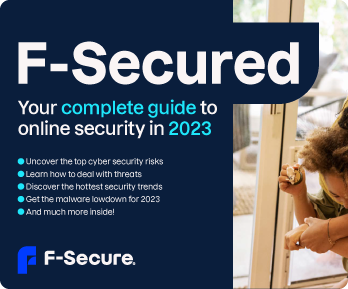
Image bank
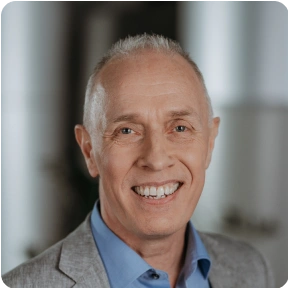
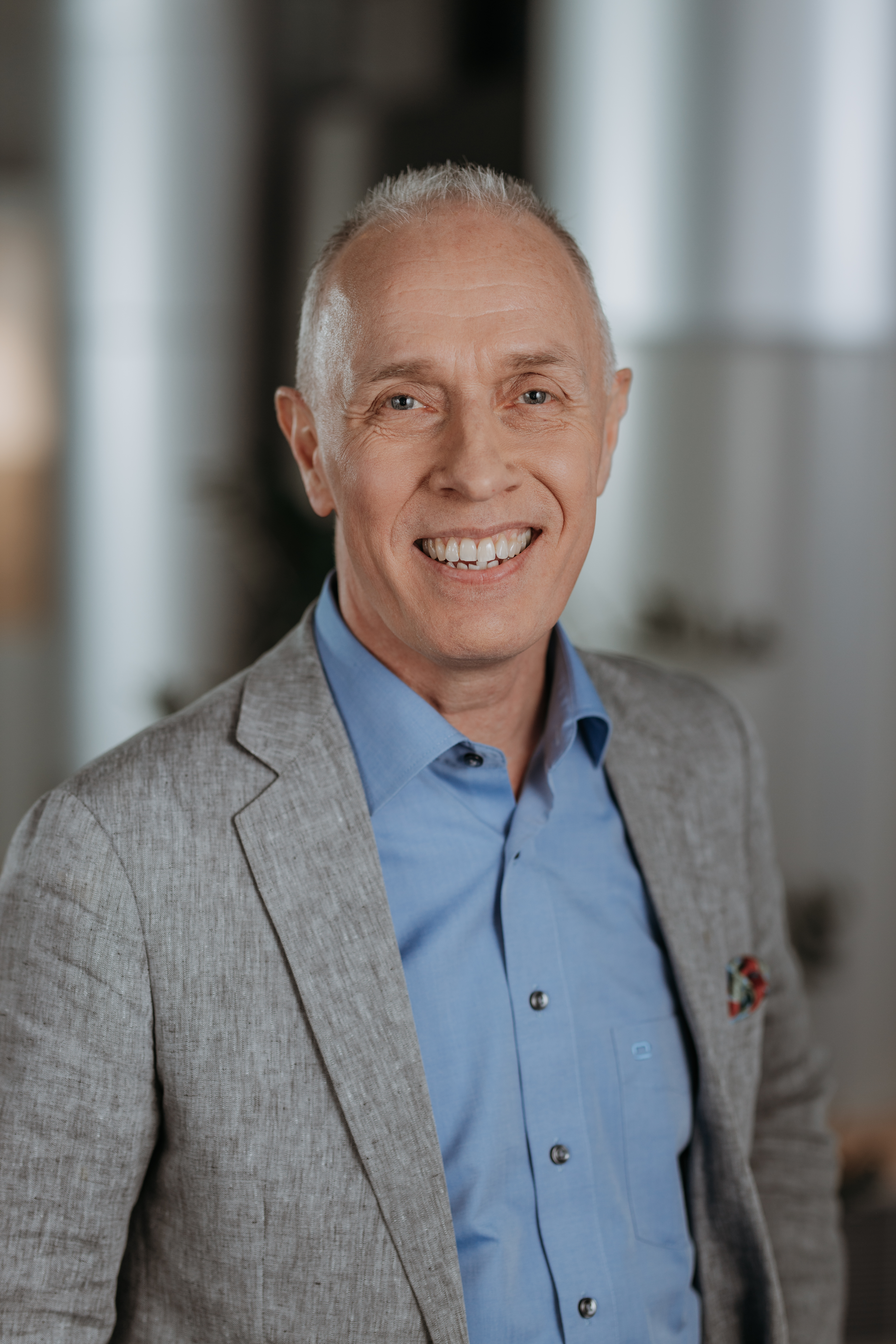
Timo Laaksonen
President and CEO of F‑Secure. Laaksonen joined F‑Secure in 2012 and has led the Content Cloud business, Consumer Business in North and Latin America, global commercial operations in Managed Detection & Response Business Unit, and the Consumer Security Business Unit. Appointed as President and CEO in 2022. Prior to F‑Secure, Laaksonen led international business units and venture-backed start-ups in the fields of security, cloud computing, telecoms, predictive analytics, and mobile services.
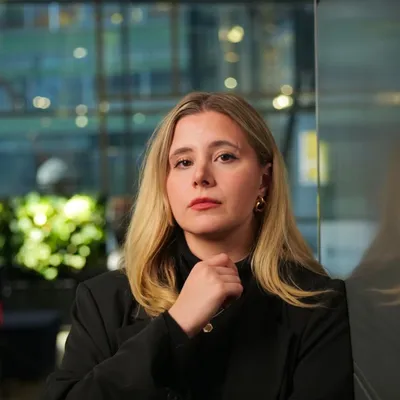
Laura Kankaala
Threat Intelligence Lead, F‑Secure. Kankaala has been in the industry for almost ten years, and her background lies in offensive security (white hacking). Featuring as a professional hacker on Team Whack — a TV series for Finnish Broadcasting Company YLE that demonstrates how everything is hackable — Kankaala is well-versed in helping consumers understand cyber security, removing the jargon and simplifying the issue, something she is passionate about.
F‑Secure logos
Download F‑Secure logos. The logos come in a range of color variations to provide maximum visibility across different backgrounds but where possible always use the positive version of the logo.