


Drawing on global insights from the Global Anti-Scam Alliance (GASA), this chapter explores the deeper human toll of scams— from victim shaming to silence driven by stigma—and why awareness alone isn’t enough.
On this page
Online scams don’t just empty bank accounts—they damage trust, dignity, and personal wellbeing.
One of the most damaging aspects of online scams isn’t the scam itself—it’s how society responds to victims.
A key driver of victim blaming is overconfidence: the belief that “I’d never fall for that,” and anyone who does must be naïve.
Globally, only around 7% of scams are reported to authorities.
Even when victims are willing to report, the process is so fragmented and complex that it becomes a barrier.
Governments and organizations spend millions on scam awareness campaigns, yet their impact is often short-lived.
While education is essential, it can’t be the only line of defense. Consumers can’t be expected to remain alert 24/7.
Education and awareness are not silver bullets. Combating scams requires a coordinated effort, with cyber security experts, governments, law enforcement, educators, and service providers all working together.
Virtual Crime Hits Harder Than Expected
Online scams don’t just empty bank accounts—they damage trust, dignity, and personal wellbeing. In fact, growing research suggests that the emotional trauma caused by virtual crimes can actually exceed that of physical ones.
A study by the Dutch police found that victims of digital crime often report higher levels of peritraumatic stress than those affected by physical incidents, including burglary and even sexual assault. Because there’s no physical interaction, people tend to underestimate the impact of online scams. The emotional damage, however, is real and lasting.
Blame’s Role in Silencing Victims
One of the most damaging aspects of online scams isn’t the scam itself—it’s how society responds to victims. While those affected by physical crimes are often met with sympathy, victims of online fraud are frequently dismissed, ridiculed, or shamed.
Instead of empathy, they’re met with blame: “How could you be so stupid?” Public shaming is even common on professional platforms like LinkedIn, where one user told a scam victim, “Even my 90-year-old mother wouldn’t fall for that.”
This culture of judgment deepens the emotional toll, fueling shame and silence. And data supports this trend: just 5% of burglary victims experience victim blaming, compared to 27% of individuals whose online bank accounts have been hacked. The numbers are even more troubling when it comes to sexual crime, with 22% of sexual assault victims reporting blame, versus 36% of those subjected to imagebased sexual abuse.
Overconfidence Fuels Victim Blaming
A key driver of victim blaming is overconfidence: the belief that “I’d never fall for that,” and anyone who does must be naïve.
According to GASA’s global research, 67% of people believe they can spot a scam. But this confidence often collapses when deception hits, leading to shame often reinforced by the judgment they’ve seen or expressed themselves. This mindset doesn’t just deepen the emotional impact—it also discourages victims from reporting.
The Silent Epidemic of Underreporting
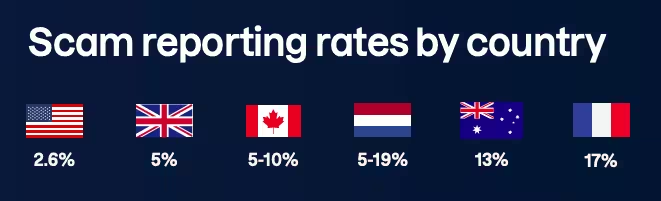
Globally, only around 7% of scams are reported to authorities. In some countries, the numbers are even lower—just 2.6% in the United States and 5% in the UK. In the Netherlands, reporting estimates range from 5% to 19%, highlighting how hard it is to measure underreporting.
Why don’t more victims come forward? Most simply don’t believe reporting will make a difference. And too often, they’re right. In most cases, victims are told the amount lost is too small, the scammer is overseas, and the chance of recovering the money is minimal. It’s a response that, while honest, does little to encourage future reporting.
A Fragmented Reporting System
Even when victims are willing to report, the process is so fragmented and complex that it becomes a barrier. Many don’t know where to turn, and when they do try, dense forms and unclear processes often shut them down.
GASA’s data illustrates this confusion clearly: 44% of people say they would report to local police, 25% to their bank, 24% to friends or family, and 23% to a national agency. With such a scattered system, victims are left uncertain—and many scams go unrecorded.
Local law enforcement is under-resourced. Despite scams being common, officers often focus on traditional crime and lack the tools to investigate cyber fraud. Directing victims to police departments that aren’t equipped to respond is a broken model. What’s needed is a single reporting channel known to authorities in each country, such as the UK’s Action Fraud.
Why Awareness Campaigns Are Falling Short
Governments and organizations spend millions on scam awareness campaigns, yet their impact is often short-lived. Humorous ads may grab attention, but the message fades quickly. Many still rely on outdated advice, like checking for spelling errors or looking for secure website connections. But today’s scammers use AI to craft flawless messages and easily obtain SSL certificates, making these tips largely ineffective.
To address this, GASA is advocating for long-term, systemic education that starts in early childhood and continues throughout every stage of life. Children playing Roblox already face scammers targeting their parents’ payment details. Students encounter fake loan offers. Pensioners are lured by fraudulent investment schemes. Every demographic is targeted year-round, so education must be continuous and relevant.
Education Alone Isn’t Enough
While education is essential, it can’t be the only line of defense. Consumers can’t be expected to remain alert 24/7. That’s why automated tools—such as those offered by F‑Secure—are critical, especially when scams are too advanced for human detection.
This also is where service providers like banks, telcos, and insurers have a unique opportunity. With regular customer engagement, they can integrate scam protection directly into their services. Instead of one-off campaigns, they can deliver short, recurring micro-trainings that steadily build awareness and reduce risk.
Looking Ahead:
It Takes a Network to Stop Scams
Education and awareness are not silver bullets. Combating scams requires a coordinated effort, with cyber security experts, governments, law enforcement, educators, and service providers all working together.
Scammers operate around the clock, which is why real progress depends not just on tools and policies, but also on moving beyond victim blaming.
If your organization interacts with customers online, you’re on the frontline of scam prevention. Don’t just warn— empower. Don’t just inform—protect. Now is the time to embrace your role and invest in smarter tools, ongoing education, and integrated solutions that truly make a difference.