

)
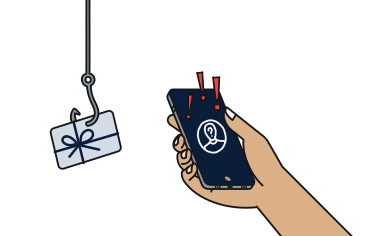
Gift cards are wonderful presents and convenient payment methods, as long as they are used responsibly and securely. According to data released by the Federal Trade Commission (FTC), consumers in the US alone already lost $212 million in gift card scams in 2024, with over 41,000 gift or reload card-related scams reported. These numbers can only leave the impact globally upon imagination.
From tempting discounts to urgent calls demanding immediate payment using a gift card, gift card scams constantly evolve. By understanding how these fraudulent schemes work, you can protect yourself and keep your money where it belongs.
How do gift card scams work?
Most gift card scams follow one of two paths:
Scammers convince victims to pay for something with a gift card
Scammers trick victims into buying fake or tampered gift cards
Both types usually follow these steps:
Unexpected contact. Scammers reach out through various channels, including phone calls, texts, emails, and social media.
Impersonation. Cyber criminals often impersonate trustworthy individuals, such as authority figures, well-known companies, or loved ones.
Creating urgency. They convince you that there is an urgent problem that can only be solved by buying gift cards and sharing the card details with them.
Directing purchase. They might recommend which specific gift cards to purchase and where to buy them. Common examples include Amazon, Google Play, Apple and eBay gift cards.
Requesting card information. Once you have purchased the gift card, scammers ask for the gift card numbers and PINs, often by requesting a photo of the card.
Stealing money. When the scammers receive the card details, they quickly drain the money from the gift card. Even if you still have the physical card, the money is gone.
It is important to remember that requests for payment via gift cards are almost always scams. No legitimate business or government agency will ever ask you to pay them with gift cards. If they do, you are most likely dealing with a scammer.
Common gift card scams
Everyone can fall victim to a gift card scam, but by familiarising yourself with the most common tactics, you will be better equipped to spot the warning signs quickly. Here are five common gift card scams and how to identify them:
1. Tax scam
A tax scam is when someone contacts you unexpectedly and demands immediate payment of unpaid taxes. These scammers often impersonate legitimate tax authorities, such as the Internal Revenue Service (IRS) in the United States, and threaten legal action if you do not pay immediately via gift cards.
Remember that legitimate government agencies will never demand payment through gift cards. If you are uncertain, verify any claims directly with the tax authority using their official website or phone number. Also, never provide payment information to someone who contacts you unexpectedly.
2. Google Play or Apple gift card scam
Scammers frequently exploit Google Play or Apple gift cards and might pose as technical support or a utility company, claiming an issue with your account. Legitimate companies will never ask you to pay with a gift card, and usually, the gift cards can only be used for purchases in the Google or Apple stores.
If you receive a request to pay with an Apple or Google Play gift card outside the stores, you should immediately end the communication and report the scam attempt to the gift card issuer.
3. Fake prize or discount scam
Have you ever been told that you have won a fantastic prize or received an unbelievable discount if you pay with a gift card? These are common tactics in fake prize and discount scams. Always be wary if you are asked to pay a fee to claim a prize or access a special deal. Legitimate lotteries will never demand payment in this manner.
If an offer sounds too good to be true or pressures you to act immediately, it is very likely a scam. Verify the offer directly with the company using their official contact information, and never pay with a gift card if you are unsure.
4. Reseller scam
Buying gift cards from online resellers or auction sites might seem like a great deal, but it often carries significant risk. You might unknowingly purchase cards that are inactive, expired, or have a far lower remaining balance than advertised.
If a gift card is being sold for significantly less than its face value on a third-party platform, it is likely to be a scam. To protect yourself, always buy gift cards directly from the official retailer or their authorised vendors.
You can also use the free F‑Secure Online Shopping Checker to check if a website selling gift cards is safe.
5. Account takeover
Scammers often use phishing to access your login credentials for online shopping platforms. Once scammers have access to your account, they can drain existing gift card balances or quickly purchase new gift cards for themselves, often without needing further verification.
To protect yourself, always be cautious of suspicious emails or messages that ask for your login details. Enable two-factor authentication on all your accounts whenever possible, and turn off one-click payment options. If you receive a gift card, it is a good practice to use it as soon as possible to minimise the risk of account takeover.
How to avoid gift card scams?
To protect yourself from gift card scams, remember that gift cards are best used for gifts, not payments to government agencies, tech support, or in response to unexpected demands. By following these simple guidelines, you can significantly reduce your risk of getting scammed:
Purchase only from reputable retailers and avoid online auction sites and unfamiliar third-party resellers.
Inspect gift cards carefully and check for any signs of tampering, such as peeled-off protective stickers or exposed PIN numbers.
Use a credit card to buy gift cards, as they often offer better fraud protection than debit cards or cash.
Be cautious during the holiday season as scammers often ramp up their activity during busy periods, such as holidays.
Use strong, unique passwords on all accounts and activate two-factor authentication.
Report gift card fraud as soon as possible to the gift card issuer and your local law enforcement agency.
)